Content Marketing: The Ultimate Guide to Growing Your Business Online in 2026

Content marketing has become one of the most effective digital marketing strategies for businesses that want to attract, engage, and convert customers. Instead of directly promoting products or services through constant sales messages, content marketing focuses on creating valuable, relevant, and informative content that helps people solve problems and make better decisions.
In today’s digital world, customers often research products and services online before making a purchase. They compare different options, search for solutions, read reviews, and look for information they can trust. This creates an important opportunity for businesses to use content marketing to educate their audience, establish credibility, and build long-term customer relationships.
Content marketing is not simply about creating content. It is about creating the right content for the right audience at the right time.
What Is Content Marketing?
Content marketing is a strategic approach that involves creating and distributing useful, relevant, and valuable content to attract a specific target audience. The primary purpose is to provide value first and gradually build trust with potential customers.
Content creation can include:
- Blog posts
- Website pages
- Articles
- Videos
- Infographics
- Email newsletters
- Podcasts
- E-books
- Case studies
- Social media content
Rather than focusing only on immediate sales, content marketing helps businesses educate and support their audience throughout the customer journey.
The main goal is simple: provide value first and build customer trust over time.
Why Is Content Marketing Important?
The digital marketplace is highly competitive, and businesses need more than traditional advertisements to attract customers. People increasingly expect brands to provide useful information before asking them to make a purchase.
Content marketing allows businesses to educate potential customers while naturally introducing their products and services.
Some of the major reasons content marketing is important include:
- Improving search engine visibility
- Increasing website traffic
- Building trust and credibility
- Generating quality leads
- Supporting social media marketing
- Increasing brand awareness
- Improving customer relationships
When businesses consistently publish useful and relevant content, their websites can become valuable information sources for their target audiences.
Benefits of Content Marketing

Content marketing can provide both short-term and long-term benefits. While paid advertising can deliver immediate visibility, content can continue attracting visitors long after it has been published.
Key Benefits of Content Marketing
- Higher organic traffic
- Better SEO performance
- Increased brand visibility
- More customer engagement
- Improved conversion opportunities
- Cost-effective marketing
- Long-term business growth
For example, a well-written blog article can continue attracting visitors through search engines months or even years after publication. This makes content marketing a sustainable strategy for businesses that are willing to invest in quality and consistency.
Types of Content Marketing Strategies
Using multiple content formats can help businesses reach different segments of their audience. Each content type serves a different purpose and can support different stages of the customer journey.
1. Blog Posts
Blogging is one of the most popular forms of content marketing. Blog articles allow businesses to answer customer questions, share expertise, and support website SEO.
Popular blog topics include:
- How-to guides
- Industry news
- Product comparisons
- Educational articles
- Beginner tutorials
Blogging is particularly useful because businesses can create content around relevant keywords and provide answers to people actively searching for information online.
2. Video Content
Video has become an important part of modern content marketing because it can communicate information in a visual and engaging format.
Popular video formats include:
- Product demonstrations
- Tutorials
- Customer testimonials
- Behind-the-scenes videos
- Educational content
Videos can help businesses explain complicated topics more clearly while creating stronger engagement with their audience.
3. Social Media Content
Social media platforms provide businesses with an effective way to distribute content and communicate directly with their audience.
Popular platforms include:
- X
- YouTube
Businesses can share blog posts, videos, graphics, educational information, customer stories, and other useful content through social media. This can increase content reach and encourage users to visit the company’s website.
4. Email Marketing Content
Email marketing remains an important digital marketing channel for maintaining relationships with customers and nurturing leads.
Email content can include:
- Newsletters
- Promotions
- Blog updates
- Product launches
- Helpful tips
Regular and valuable communication can help businesses stay connected with their audience and keep customers informed.
How Content Marketing Supports SEO
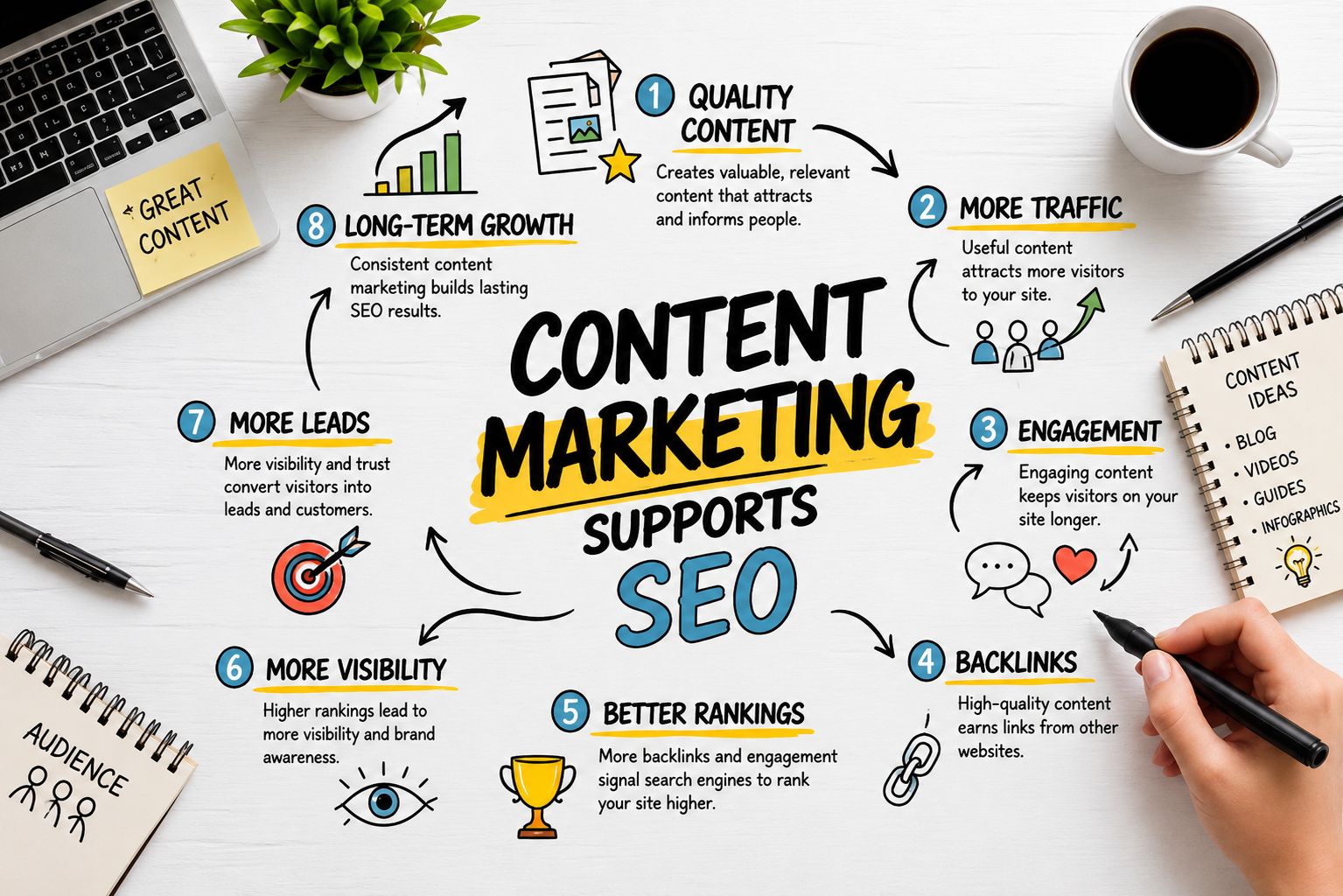
Content marketing and SEO work closely together. Search engines aim to provide users with useful and relevant information, so businesses that consistently create high-quality content can improve their online visibility.
Good content can support SEO by:
- Targeting keywords naturally
- Increasing website authority
- Attracting backlinks
- Improving user engagement
- Increasing time spent on pages
- Supporting internal linking
For example, a website that consistently publishes detailed content around a particular subject can establish stronger topical relevance and provide more useful information to visitors.
How to Build an Effective Content Marketing Strategy
Creating content without a clear strategy can make it difficult to achieve meaningful results. A successful content marketing strategy should begin with audience research and clear objectives.
Step 1: Understand Your Audience
Before creating content, businesses should understand the people they want to reach.
Important factors include:
- Customer needs
- Common problems
- Interests
- Search behaviour
- Buying preferences
Understanding your audience makes it easier to create content that answers their questions and addresses their real needs.
Step 2: Perform Keyword Research
Keyword research helps businesses identify the terms and phrases people use when searching online.
The source content identifies tools such as:
- Google Keyword Planner
- Ahrefs
- SEMrush
- Ubersuggest
Choosing relevant keywords can help businesses create content that aligns with what their target audience is searching for.
Step 3: Create High-Quality Content
Effective content should be:
- Informative
- Original
- Easy to read
- Accurate
- Helpful
The primary focus should be on solving customer problems and providing useful information rather than constantly promoting products or services.
Step 4: Publish Consistently
Consistency is important for long-term content marketing success. Businesses can create a content calendar to organize their publishing schedule.
For example:
- One blog post per week
- Regular social media updates
- Monthly newsletters
Consistent publishing helps businesses maintain visibility and build authority over time.
Best Practices for Content Marketing
A strong content strategy should focus on both quality and user experience. Businesses can improve their content performance by following several best practices.
Important practices include:
- Write attractive headlines
- Use short and readable paragraphs
- Include bullet points where appropriate
- Add relevant images and videos
- Optimize content for SEO
- Update older articles regularly
- Add internal links
- Use clear calls to action
These techniques can improve readability, encourage engagement, and make content more useful for visitors.
Common Content Marketing Mistakes
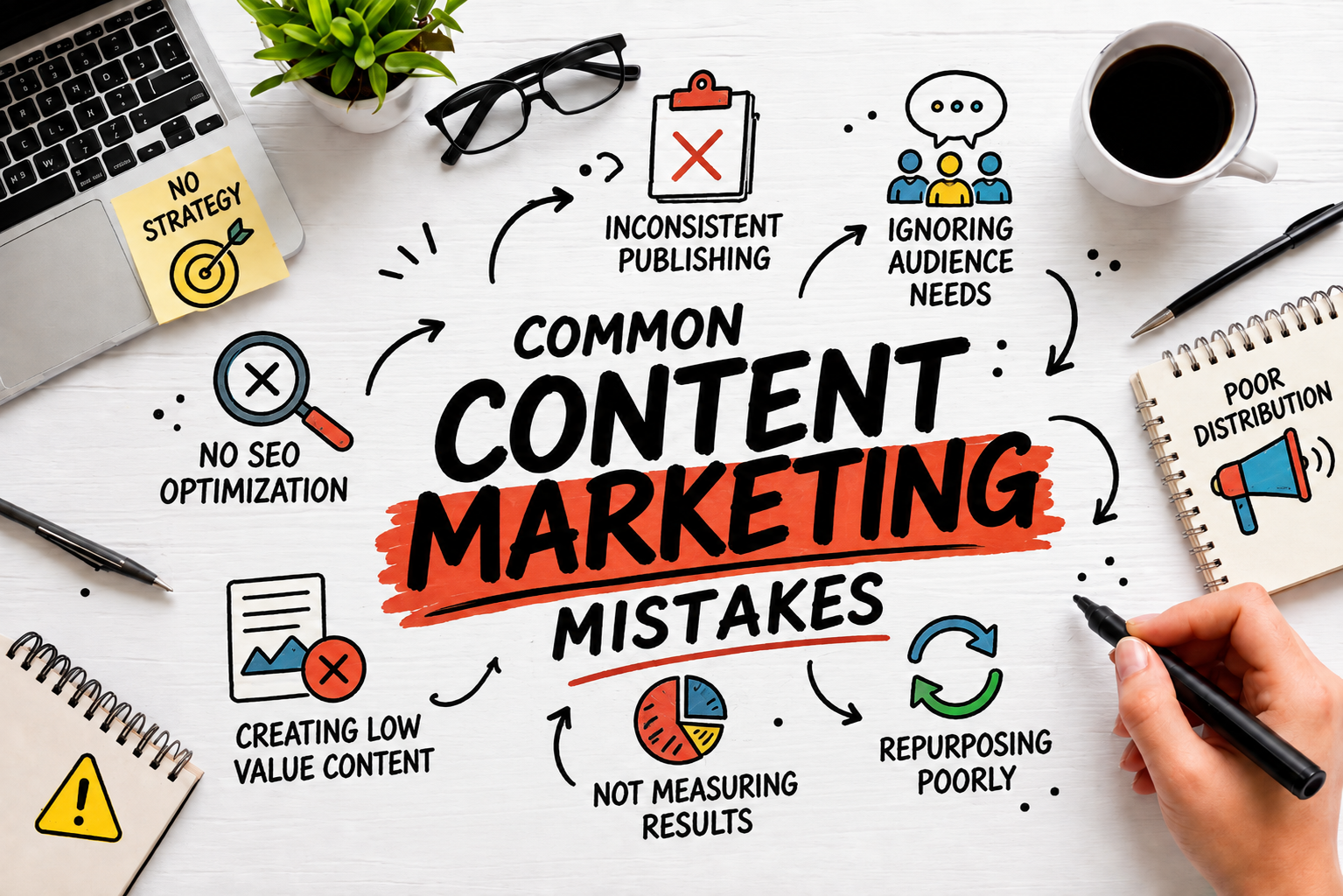
Content marketing can become ineffective when businesses create content without understanding their audience or objectives.
Some common mistakes include:
- Publishing without a strategy
- Ignoring SEO
- Creating overly promotional content
- Posting inconsistently
- Not tracking performance
Content should focus on educating and informing the audience first. When businesses establish trust and demonstrate their expertise, sales opportunities can develop naturally.
Content Marketing Trends in 2026
The digital marketing industry continues to evolve as technology and consumer behaviour change. Businesses need to stay informed about emerging trends to remain competitive.
Some of the trends highlighted in the source content include:
AI-Powered Content Creation
Artificial intelligence is becoming an important part of the content creation process. Businesses can use AI-powered tools to support content planning and production.
Short-Form Videos
Short-form video content continues to provide businesses with opportunities to communicate information quickly and engage audiences.
Voice Search Optimization
As people increasingly use voice-based search, businesses can consider creating content that answers conversational questions and provides direct information.
Interactive Content
Interactive content can encourage audiences to actively participate instead of simply consuming information.
Personalized Marketing
Personalized content can help businesses provide information that is more relevant to different audience segments.
User-Generated Content
Content created by customers can help businesses demonstrate real experiences and encourage greater trust among potential customers.
Adapting to relevant trends can help businesses remain competitive while continuing to provide valuable experiences for their audiences.
Measuring Content Marketing Success
Creating content is only one part of a successful content marketing strategy. Businesses should also measure performance to understand what works and what needs improvement.
Important content marketing metrics include:
- Organic traffic
- Keyword rankings
- Bounce rate
- Time on page
- Social shares
- Leads generated
- Conversion rates
Regular performance analysis helps businesses identify successful content, understand audience behaviour, and improve future content strategies.
Conclusion
Content marketing is a powerful digital marketing strategy that helps businesses attract customers, improve online visibility, build trust, and support long-term growth.
Successful content marketing requires more than simply publishing articles. Businesses need to understand their audience, create valuable content, optimize it for search engines, publish consistently, and measure performance.
The most important elements of an effective content marketing strategy include:
- Understanding your audience
- Creating valuable and relevant content
- Optimizing content for SEO
- Publishing consistently
- Measuring and improving performance
As digital competition continues to increase, businesses that invest in useful and audience-focused content can create stronger online visibility and lasting customer relationships.
Content marketing is a long-term strategy. The businesses that consistently provide valuable information, solve customer problems, and adapt to changing digital trends are better positioned to attract visitors, generate leads, and support sustainable business growth.
Start Your Content Marketing Strategy Today
Begin by understanding your target audience, researching relevant topics and keywords, creating useful content, and publishing consistently.
With the right strategy and continuous improvement, content marketing can become a powerful part of your digital marketing efforts and help your business build a stronger online presence in 2026.
Auther : Mufeed