Performance Marketing: Driving Growth Through Measurable Results
Performance marketing has become one of the most powerful digital marketing strategies for businesses seeking measurable growth. Unlike traditional advertising, where companies pay for exposure regardless of outcomes, performance marketing focuses on actual results such as clicks, leads, sales, and conversions.
In today’s competitive digital landscape, businesses need to know exactly where their marketing budget is going and what return it generates. Performance marketing provides that transparency by allowing marketers to track every stage of the customer journey and optimize campaigns based on real data.
What is Performance Marketing?
Performance marketing is a digital advertising approach where advertisers pay only when a specific action is completed. These actions can vary depending on business goals and campaign objectives.
Common performance marketing goals include:
- Website visits
- Lead generation
- Product sales
- App downloads
- Email sign-ups
- Form submissions
- Phone call inquiries
This results-driven approach helps businesses maximize their advertising budgets while focusing on activities that directly contribute to growth.
Why Businesses Choose Performance Marketing
One of the biggest advantages of performance marketing is accountability. Every click, impression, and conversion can be measured, allowing marketers to understand which campaigns deliver the best results.
Key benefits include:
- Measurable ROI
- Better audience targeting
- Budget optimization
- Real-time campaign tracking
- Increased conversion rates
- Scalable business growth
Because campaigns are continuously monitored, marketers can quickly identify what works and make improvements when necessary.
Major Performance Marketing Channels
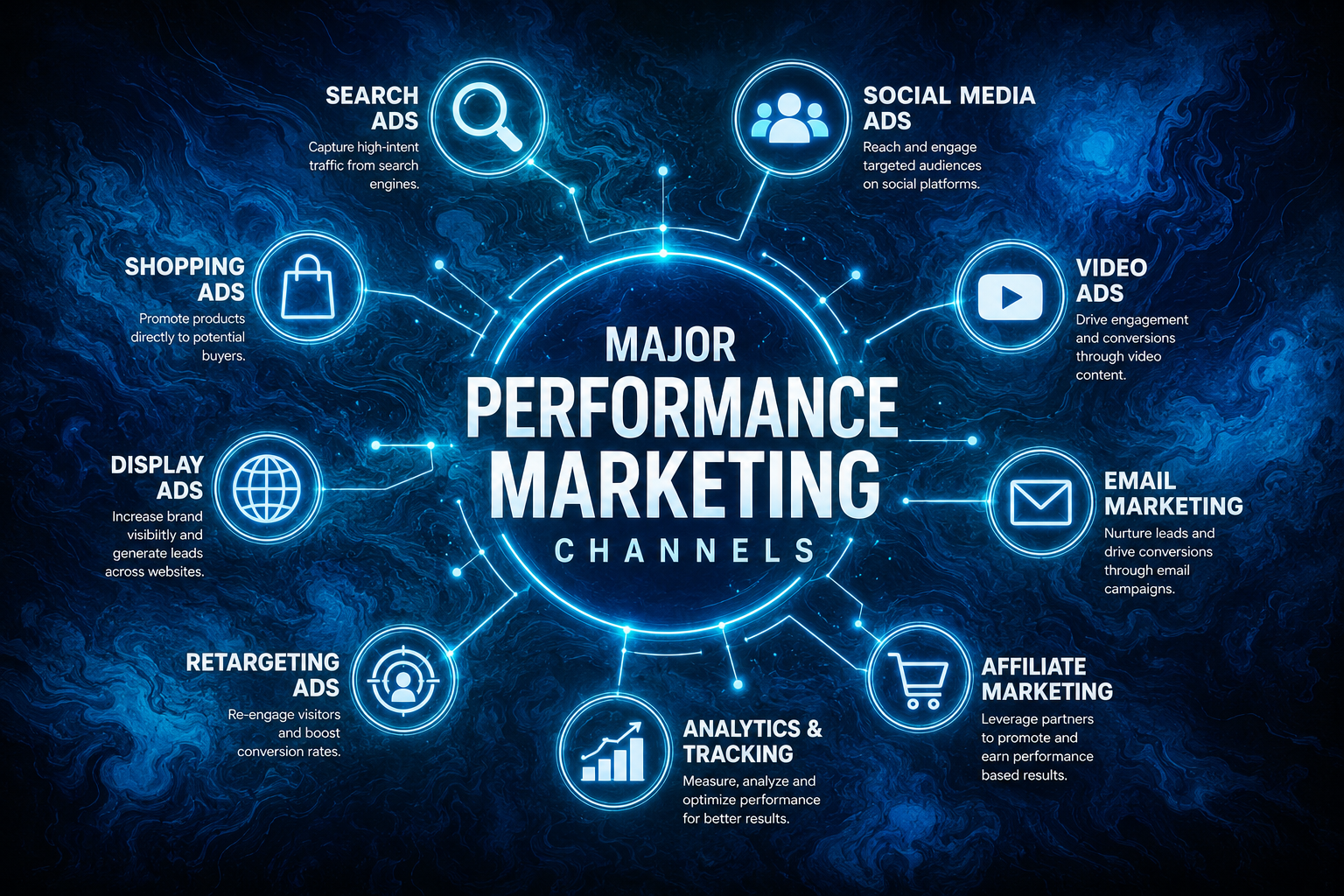
Performance marketing uses several digital channels to reach potential customers and drive conversions.
Search Engine Marketing (SEM)
Search advertising allows businesses to appear when users actively search for products or services online. This makes it one of the highest-intent marketing channels.
Benefits include:
- Immediate visibility
- High-quality traffic
- Keyword-based targeting
- Strong conversion potential
Google Ads remains one of the most widely used platforms for search marketing.
Social Media Advertising
Social media platforms provide advanced targeting options that help businesses reach specific audiences based on demographics, interests, and behaviors.
Popular platforms include:
- TikTok
- X (Twitter)
Social media advertising is particularly effective for brand awareness, lead generation, and customer engagement.
Affiliate Marketing
Affiliate marketing involves partnering with publishers, influencers, or content creators who promote products and earn commissions for successful referrals.
Advantages include:
- Performance-based costs
- Expanded audience reach
- Lower risk
- Increased sales opportunities
Many e-commerce businesses use affiliate programs to scale their customer acquisition efforts.
Essential Performance Marketing Metrics
Data is the foundation of performance marketing. Success is measured through key performance indicators (KPIs) that help marketers evaluate campaign effectiveness.
Click-Through Rate (CTR)
CTR measures how often users click an advertisement after viewing it.
A high CTR often indicates:
- Relevant targeting
- Strong ad copy
- Effective creative design
Cost Per Click (CPC)
CPC measures the amount spent for each ad click.
Marketers monitor CPC to:
- Control budgets
- Improve efficiency
- Optimize bidding strategies
Conversion Rate
The conversion rate indicates how many visitors complete a desired action after interacting with a campaign.
Common conversions include:
- Purchases
- Registrations
- Lead submissions
- Downloads
A strong conversion rate suggests that both the advertisement and landing page are performing effectively.
Return on Ad Spend (ROAS)
ROAS measures the revenue generated from advertising investments.
For example:
- Ad Spend: $1,000
- Revenue: $5,000
The ROAS would be 5:1, meaning every dollar spent generated five dollars in revenue.
The Performance Marketing Funnel
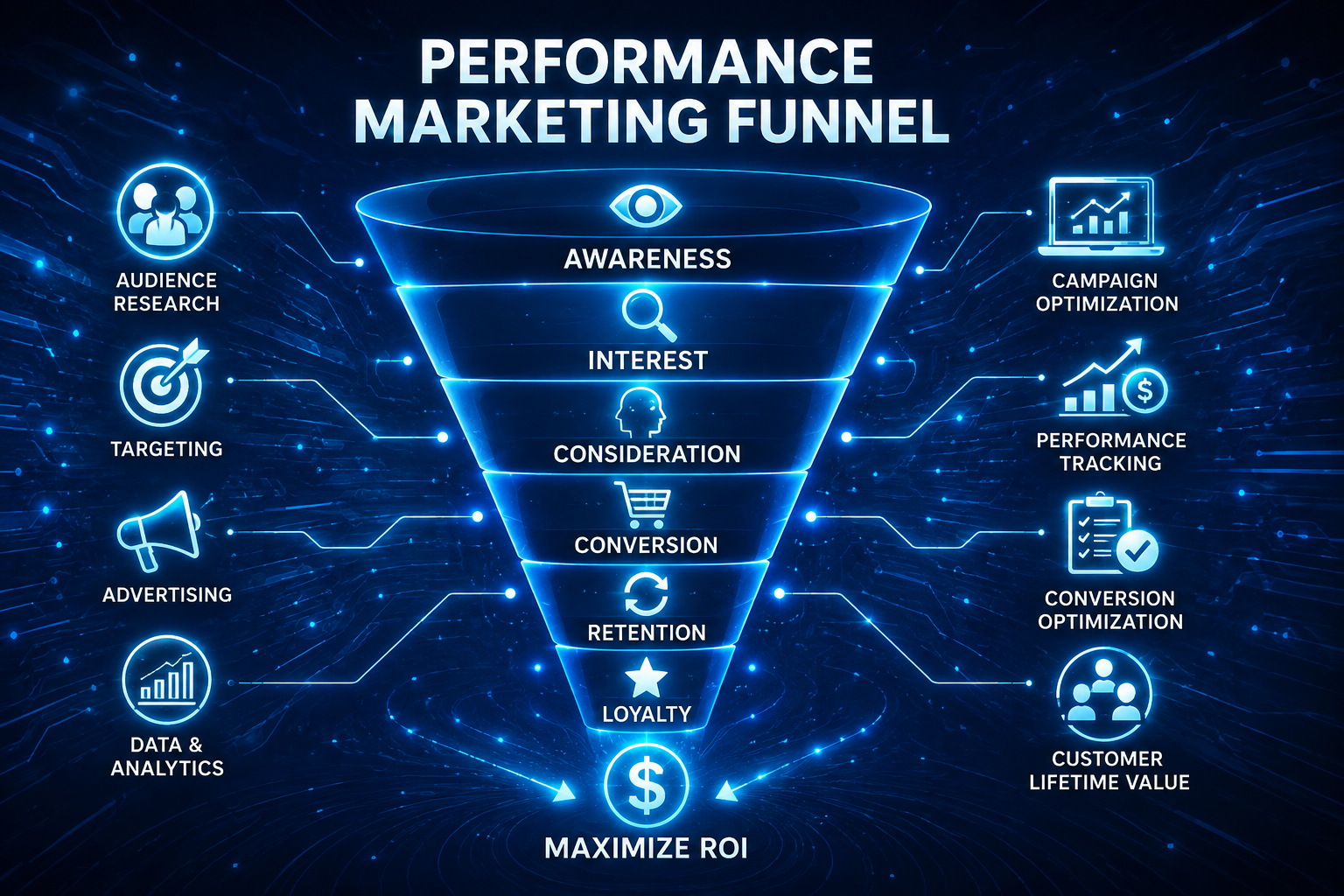
Successful campaigns guide potential customers through multiple stages before a conversion occurs.
Awareness Stage
At this stage, businesses focus on introducing their brand to new audiences.
Common tactics include:
- Video advertisements
- Display advertising
- Social media campaigns
- Influencer collaborations
The goal is to capture attention and generate interest.
Consideration Stage
Potential customers begin evaluating available options and researching solutions.
Marketers often use:
- Retargeting campaigns
- Educational content
- Product demonstrations
- Email nurturing sequences
This stage helps build trust and credibility.
Conversion Stage
The conversion stage focuses on turning interested prospects into paying customers.
Effective techniques include:
- Limited-time offers
- Promotional discounts
- Optimized landing pages
- Strong call-to-action buttons
At this stage, every detail matters because small improvements can significantly increase conversion rates.
Retention Stage
The customer journey does not end after a sale.
Retention strategies include:
- Loyalty programs
- Personalized emails
- Exclusive offers
- Customer support initiatives
Retaining customers is often more cost-effective than acquiring new ones.
Best Practices for Performance Marketing Success
To achieve consistent results, businesses should follow proven performance marketing practices.
Set Clear Objectives
Every campaign should have measurable goals such as:
- Generating qualified leads
- Increasing online sales
- Growing website traffic
- Reducing acquisition costs
Clear objectives make campaign evaluation easier.
Know Your Target Audience
Understanding customer behavior is essential for effective targeting.
Research should focus on:
- Age groups
- Interests
- Buying habits
- Pain points
- Online behavior
The better you understand your audience, the better your campaign performance will be.
Optimize Landing Pages
Even highly successful advertisements can fail if the landing page experience is poor.
Important optimization factors include:
- Fast loading speed
- Mobile responsiveness
- Clear messaging
- Strong calls to action
- Customer testimonials
A well-designed landing page improves conversion rates and overall campaign profitability.
Conduct A/B Testing
Continuous testing helps identify top-performing campaign elements.
Items commonly tested include:
- Headlines
- Images
- Ad copy
- CTA buttons
- Landing page layouts
Small adjustments can often lead to significant performance improvements.
Future of Performance Marketing
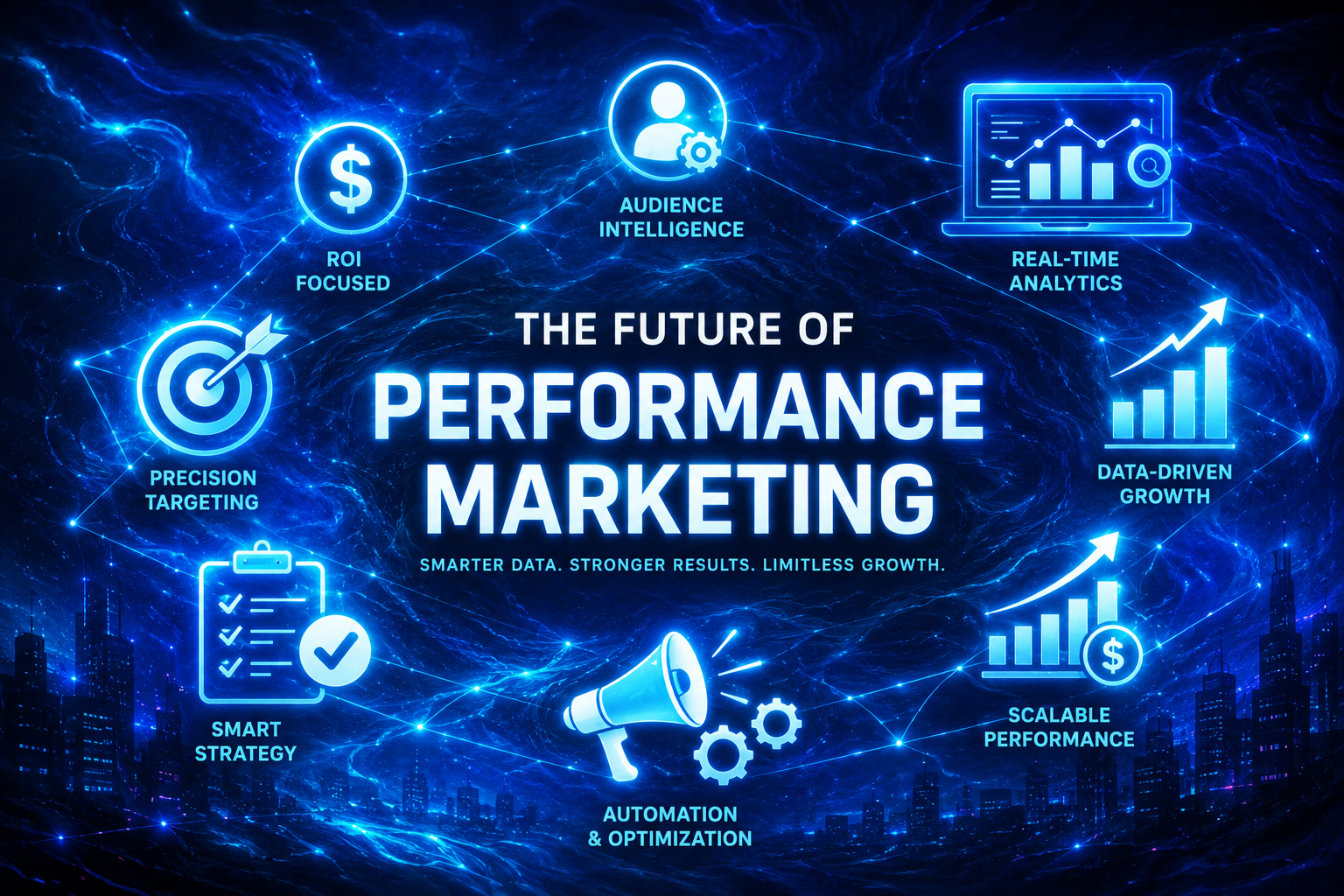
Technology continues to reshape the digital marketing landscape. Businesses are increasingly using artificial intelligence and automation to improve campaign performance.
Emerging trends include:
- AI-powered advertising
- Predictive analytics
- Marketing automation
- Personalized customer experiences
- First-party data strategies
- Advanced attribution models
Organizations that adapt to these changes will be better positioned to achieve sustainable growth.
Conclusion
Performance marketing has revolutionized digital advertising by focusing on measurable results rather than assumptions. Through data-driven strategies, businesses can optimize spending, improve customer acquisition, and maximize return on investment.
Whether through search advertising, social media campaigns, affiliate marketing, or email automation, performance marketing enables organizations to make smarter decisions and achieve scalable growth. In an increasingly competitive digital environment, businesses that prioritize performance marketing gain a significant advantage by turning marketing efforts into measurable business outcomes.
Auther : Mufeed